What if your biggest leadership blind spot… was you?
Even seasoned leaders get tripped up by the mental shortcuts they don't realize they're using. Wrong Call is about catching them in time.
Smart leaders. Sound logic. The wrong call anyway.
A decision can look structurally sound and still carry a hidden fracture — a bias that warps judgment before the call is ever made. Wrong Call is about decision integrity: the invisible distortions that sabotage good leaders, and the discipline of catching them in time.
It works on two levels at once — how bias bends judgment across an organization through real case examples, and how it plays out inside a single leader through the contrasting logic of two executives facing the same call.
Eight ways the call goes wrong
These eight are examples — some of the most common distortions the book works through, not a complete catalog. Each is a pattern any capable leader can slip into without noticing, which is exactly what makes it dangerous.
Confirmation
You weigh the evidence that already agrees with you and quietly discount the rest.
Anchoring
The first number in the room owns every number that comes after it.
Status quo
Standing still feels safer than it is, so the default wins by inertia.
Hindsight
Once you know the outcome, the decision looks inevitable — and the lesson disappears.
Overconfidence
Conviction gets mistaken for certainty, and certainty stops the questions.
Groupthink
Silence in the room gets read as agreement, and dissent never makes it to the table.
Survivorship
You study the wins, bury the misses, and learn the wrong lesson from both.
Change aversion
You wait for the path to feel clear — until it's too late to shape it.
Same call. Two leaders.
Alex
Trusts the gut, moves fast, and rolls out company-wide before the assumptions are tested. The bias never announces itself — it just steers.
Jordan
Goes looking for the disconfirming case, pilots before scaling, and tracks what actually changed. Same pressure, deliberate integrity.
Every chapter closes by running the same situation through both leaders — so you can see exactly where a sound-looking decision fractures, and what catching it looks like in practice.
Who wrote this

Grant Kaley
Grant Kaley is a behavioral thinker by education, training, and execution — a psychology major who turned decades of work into a study of how decisions actually get made. A recovering management consultant turned enterprise change agent turned entrepreneur, and a lifelong student of the decision sciences, he became fascinated by how capable leaders make calls their own logic should have caught.
He taught at Duke University's Fuqua School of Business and advised internationally with SKEMA Business School, and across more than two decades in strategy, innovation, and leadership his work helped launch and scale enterprise products across financial services, supply chain, cybersecurity, and manufacturing — generating nearly a billion dollars in net new value over 30+ engagements and growth initiatives. Today he is founder and CEO of NexStratus, the decision-intelligence company he spun off and now leads.
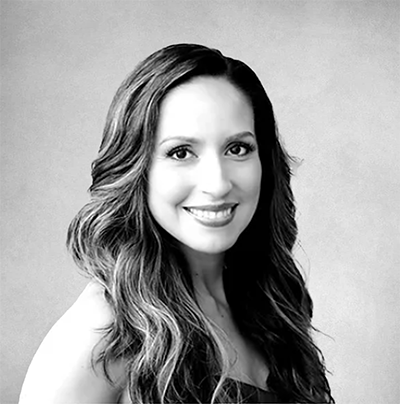
Kei Alegria-Flores, MPH, PhD
Kei Alegria-Flores, MPH, PhD, is a behavioral scientist who studies why some initiatives, innovations, and transformations take hold while others quietly fail. Trained in implementation and organizational science, with a doctorate in health policy and management, she has led global research and implementation work, advised startups and established organizations, and served as a Vice President of Behavioral Sciences — helping leaders turn evidence into adoption, behavior change, and measurable results.
An entrepreneur who also operates a growing logistics company, she brings the realities of leadership and execution to her work. She contributed to Wrong Call in an advisory capacity, bringing the behavioral-science perspective that grounds its treatment of bias and decision-making.

Dr. Tony O'Driscoll
The book opens with a foreword from Dr. Tony O'Driscoll, who frames bias as the hidden distortions that quietly steer a leader's decisions before they're ever consciously made — the same fault line this book is built to expose.
A former IBM strategy consultant and the author of Everyday Superhero, Tony has spent his career studying how leaders and organizations adapt under accelerating change, with work featured in the Harvard Business Review and the Financial Times.